Skip to content

tinc botanica

Herbal Skin Care

  • Menutinc botanica menu
  • Blog
  • Dry Brushing: What It Is and Why I Love It

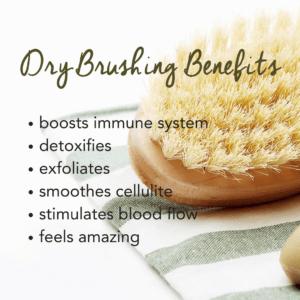
    Dry-Brushing-Benefits-insta-300x300

    (Photo source)

    In my never ending quest to lead a healthier lifestyle, I’ve done a lot of research about this Ayurvedic self-care ritual (both by experimenting on myself and lots and lots of reading)! And while the jury is still out on whether it’s as healthy for you as its biggest fans claim, today I’d like to share why I consider dry brushing worthy of a space in my daily health care routine.

    For those who might not be familiar with dry brushing, it involves brushing your body with a dry, stiff-bristled brush. Its benefits are said to include: exfoliating flaky winter (or any time of year) skin, stimulating detoxification by encouraging lymph drainage, increasing circulation and energy, aiding digestion, and fans say it can improve the appearance of cellulite. But are these claims backed up by science? In this post, I want to talk a little bit about what has been proven, what hasn’t, and why I will continue this lovely self care ritual either way. 

    Exfoliation

    Let’s start with the claim that dry brushing can help clear flaky (winter) skin. According to this source, “the mechanical action of dry brushing is wonderful for exfoliating dry winter skin.” Another source talks about the benefits of physical exfoliation, and how the stiff bristles of a dry brush, can “manually sweep away dull, rough, flaky skin cells.” My personal opinion and experience? Dry brushing is a wonderful exfoliant, and makes my skin feel softer, smoother, and generally more radiant! 

    Detoxification & Lymph Support

    Okay, so what about the claims that dry brushing can help to detoxify by improving circulation and encouraging lymph drainage? On the one hand, sources such as this one claim there’s no proof that dry brushing improves the lymphatic system. But other reliable sources tell a different story… Wellness Mama, a fellow mama and healthy lifestyle aficionado (and one I really admire!) says it like this: “The lymphatic system is a major part of the body’s immune system. It is made up of organs and lymph nodes, ducts, and vessels that transport lymph throughout the body. Many of these lymph vessels run just below the skin. Proponents of dry brushing claim that brushing the skin regularly helps stimulate the normal lymph flow within the body and helps the body detoxify itself naturally.” So. my verdict on the claim regarding circulation and lymph flow? While sources disagree about the science, I find dry brushing invigorating. Furthermore, it seems logical that, if the “lymph runs just below the skin,” that stimulating the body through physical exfoliation could encourage lymph flow! 

    Increased Energy Levels

    Speaking of which, another of its many touted benefits is the ability for dry brushing to increase energy levels. Going along with the idea that dry brushing can stimulate the nervous system, it would make sense that it might bring about increased energy levels. Personally, I love it. I always feel a sense of rejuvenation after dry brushing. That’s incentive enough for me to want to do it every day! You can read more about it here.

    Digestion

    Okay, so what about digestion? Is it true that dry brushing can help improve our gastrointestinal system? Some sources claim that massaging the lymph nodes can help the body eliminate water and toxins, so in that regard, dry brushing might be linked to improved digestion. Though, other sources discuss how there are better methods for dealing with digestion than dry brushing.

    Reduce Appearance of Cellulite

    Last but certainly not least: cellulite. Is it seriously possible that dry brushing can improve (at least the appearance of) cellulite?? Some sources say that by stimulating circulation via dry brushing, the skin will temporarily become smoother looking. Okay, so there’s that. Many other sources say similar things about this “temporary” improvement to the skin. But, here’s my opinion: dry brushing makes me feel great and makes my skin feel tingly and happy. While I’m definitely convinced that regular exercise does a better job of ultimately helping with any dimply areas, the evidence certainly doesn’t suggest that dry brushing could hurt anything.

    A Few Things to Consider:

    1. I LOVE to add a few drops of juniper berry and/or grapefruit to my dry brush. Both oils are loaded with skin and aromatherapy benefits, making the experience that much more spa-like.
    2. It is always recommended to dry brush in the direction of your heart. I personally start at my feet and do about 10 strokes in each section as I work my way up my legs. Then I do the same thing with my arms and chest, always brushing in the direction of my heart.
    3. Because of the increased energy and stimulated nervous system, it’s recommended to dry brush earlier in the day, and preferably first thing in the morning.
    4. PRO TIP: try dry brushing while standing in the shower or bath, before you turn your water on. The idea is you will wash off those dead skin cells and get a more thorough exfoliation. 
    5. Be extra cautious when brushing on sensitive skin areas, such as your breasts or face. I personally do not dry brush my face. I have sensitive skin and I use a milder exfoliant for my sensitive face, such as a gentle sugar scrub.
    6. Keep in mind that dry brushing isn’t meant to be an actual medical treatment (source). 
    7. Because dry brushing hasn’t been extensively researched (by way of specific scientific studies), “[m]uch of the evidence…is anecdotal.” (source)

    Resources

    https://health.clevelandclinic.org/the-truth-about-dry-brushing-and-what-it-does-for-you/

    https://www.verywellhealth.com/dry-brushing-the-skin-4177763

    https://wellnessmama.com/26717/dry-brushing-skin/

    https://www.elle.com/uk/beauty/body-and-physical-health/a36493/dry-body-brushing-health-benefits/


  • 5 Tips & Tricks for Magnificent Magnesium Butter

    IMG_6437

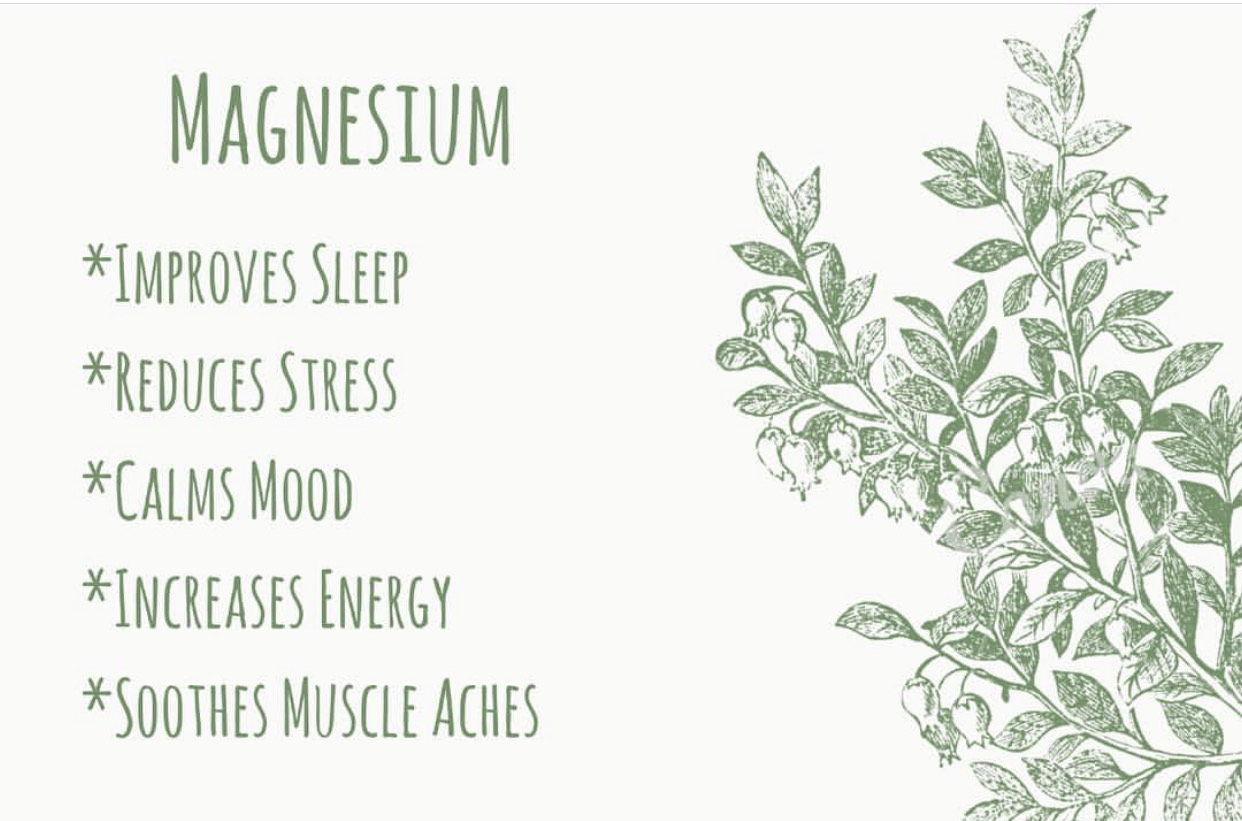
    If you have been following me for any length of time, you are probably well aware of my love for magnesium. Seriously. This powerful mineral has fundamentally changed my life! For one thing, using my Magnificent Magnesium Butter, I sleep SO MUCH BETTER. For another, I have more energy AND my body seems to manage stress far better than it did before. Plus, when it comes to sore muscles (which is *always* because I have chronic low back pain, plus a toddler and a baby 🤪), I have a secret weapon that really, truly helps me feel better. 

    For sleep – I recommend rubbing a little on the bottoms of your feet and the back of your neck prior to bedtime.

    For pain – I recommend rubbing a little bit wherever you are sore.

    For stress/headaches – I recommend rubbing a little on the back of your neck and/or on your temples.

    Since I started selling my Magnificent Magnesium Butter, it has been one of my most popular tincs! So, in the spirit of making sure all my customers are empowered with the many tips and tricks I’ve learned with this magical butter, I want to detail the following information:


    1. COCONUT OIL HAS A MELTING POINT OF 76 DEGREES FAHRENHEIT

    This means that it is important to be mindful of the current temperature and the corresponding consistency of your magnesium butter – because the temperature WILL effect whether your butter is really hard or super soft. For this reason, I recommend keeping your magnesium butter in the fridge when it is really warm outside, and keeping it somewhere warmer in the winter. Whatever you prefer!

    No matter where you choose to store your butter or the time of year, please know that the effect is the same! If the butter is very cold, just scrape a little bit out, and it will still melt in your hands quickly. If the butter is in a liquid or semi-liquid state (because it’s summer or you live in a warm climate), I highly recommend keeping it refrigerated. 

    1. IT ISN’T A HAND CREAM OR A BODY LOTION

    Although it sure looks like a regular cream or lotion, magnesium butter is quite different! Magnesium chloride oil is actually a brine, as opposed to an oil, and its chemical composition makes it feel kind of sticky/slippery after application. It can even cause a slight stinging sensation. The stinging can be due in part to the degree to which you are magnesium deficient! So the higher your levels, the less you’d feel any stinging. Of course, if you have sensitive skin, you might be feeling a reaction for other reasons too*. You can read more about this here.

    The main takeaway is NOT to apply it as you would a lotion or a cream. A little bit goes a long way, and there is no need to rub it all over your hands or legs (and because of that sticky feeling, you wouldn’t want to!)  

    *It is always smart to test new products on a small patch of skin before using regularly.


    1. MAGNESIUM SEEMS TO HAVE A CUMULATIVE EFFECT 

    Based on the research I have done both online and from personal experience, I can definitely say that regular use of magnesium supplements can improve overall health. I notice more improvements the longer and more consistently I use it. So, the longer and more consistently I use my magnesium butter and am mindful about consuming more magnesium-rich foods, the more I can feel the benefits building up in my body (sleeping better, better stress management, and more energy!)

    According to this source, a group of people with low magnesium levels participated in a study, and were asked to use transdermal magnesium (bath flakes and oil) daily for one month. After using a diagnostic called ExaTest, the vast majority of those participants had markedly higher magnesium levels. Just one month of regular use totally raised their levels!

    1. YOU MIGHT BE MAGNESIUM DEFICIENT IF…

    “Some experts claim that magnesium deficiency is the single largest health problem in our world today.”[2]

    You might consider topical or oral magnesium supplements if:

    1. You eat too much sugar
    2. You take calcium supplements.
    3. You drink soda and other sugary drinks.
    4. You have celiac disease or other digestive disorders like Crohn’s disease.
    5. Your diet contains a lot of processed foods and dairy.
    6. You have a water softener or city water.
    7. You have Type 2 diabetes.
    8. You avoid green vegetables, leafy greens, and other magnesium-containing foods.
    9. You are an older adult, and/or take certain prescription medications.
    10. You eat food grown in depleted soils. (Which is sadly almost everyone!)


    1. MAGNESIUM’S ROLE IN YOUR HEALTH:

    “Magnesium is responsible for over 300 biochemical reactions in the body and impacts blood pressure, metabolism, immune function, and many other aspects of health.” [2]

    According to this source, some of the EVIDENCE-BASED benefits of healthy magnesium levels include:

    1. Boosting exercise performance
    2. Acts as an anti-depressant
    3. Benefits against Type 2 Diabetes
    4. Can lower blood pressure
    5. Anti-Inflammation benefits
    6. Can help prevent migraines
    7. Reduces insulin resistance
    8. Improves PMS symptoms


    If you want to read more about how…

    • magnesium deficiency looks like a lot of other conditions, since magnesium is involved in so many body processes.
    • symptoms include heart arrythmias, depression, digestive problems, muscle spasms, and more.
    • low magnesium is caused by things like stress, medicines, alcohol consumption, and certain medical conditions. Modern farming yields lower magnesium plants than previous generations had.

    …check out this article.


    RESOURCES

    1. https://www.ancient-minerals.com/too-much-of-a-good-thing/
    2. https://wellnessmama.com/54128/magnesium-deficiency/
    3. https://www.bulletproof.com/supplements/vitamins-minerals/magnesium-deficiency-supplements-causes/
    4. https://www.healthline.com/nutrition/10-proven-magnesium-benefits#section1
    5. https://www.ancient-minerals.com/transdermal-magnesium/
    6. http://www.exatest.com/
  • Passion Project: A Confession

    In many ways, the tinc botanica lifestyle I am cultivating is the ultimate passion project for me: that is, I believe in and care about it so much, that in a perfect world, I would be building my tinc brand full time. I derive SO much joy from learning about oils and plants and ways to empower my family by making our own apothecary and living a lifestyle as low-tox as possible 💖🌿

    But I have a confession.

    Between my many other projects (I’m a teacher and teacher trainer, which I’m blessed to say I also thoroughly enjoy ❤️), raising my two babes, and LIFE, I am finding a true irony is happening:

    I make and use tincs because they are a part of a self care experience that I deeply care about, BUT doing every single step of the business by myself can very easily become overwhelming 🙃 and incredibly, creates a stronger need for self care than I had prior to starting my business. Pretty ironic, eh?

    SO. Let me be clear: I am NOT in the slightest bit saying I’m giving up on tinc botanica. No way! But I am explaining why I do not have a shop button on any of my social media platforms, why I have stopped posting on Insta and FB daily, and why I haven’t opened my Etsy shop yet.

    Still…the operative word here is “yet” 😉

    I will indeed get there when the time is right, friends! But for now, in an effort to align my vision with my practice, I am committing to keep my website and social media presence super low key.

    On the one hand, I’m keeping myself plenty busy exploring the plant world and educating myself about the medicine in the earth all around us. On the other, I’m making smarter choices about how I use my time.

    I aim to love what I do so much that it doesn’t feel like work…and you know what? Giving myself the gift of taking things down a wee notch feels sooooo good.

    In the meantime, freeing up some of that daily social media time, is creating space for SUPER COOL things in the very near future! I can’t wait to share all about it…when I have time of course, HAHA 😂

    Henry David Thoreau quote

    Anyway, I love you all! Thanks so much for your energy and support. It takes a village, and I’m so blessed you are in mine 🥰

    Love,

    Amanda

  • Coconut Oil is Magical


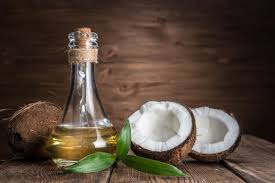
    coconut oil

    Ahhh, coconut oil 😍

    This oil smells divine and the list of amazing things it does for our health is incredible! In this blog post, I’d like to share ten ways I use coconut oil in my home and/or in my tinc botanica products.

    Please also note the following:

    *Coconut oil has a melting point of 76 degrees fahrenheit. This is why it can be super hard in the winter and become a liquid in the summer. When using it in your skin products, it is often wise to adjust your ratios of coconut oil to butters etc, according to the season.

    *I am in no way a medical professional. I’m a lover of living a mindful lifestyle in which we keep unnecessary chemicals to a minimum. What I know about coconut oil comes from years of personal experience and a lot of research!

    *It is always a good idea to test a small area on your skin before trying any oil for the first time.

    So, without further ado I present to you my list of ten health benefits that coconut oil has been known to provide:

    1. UV Protection

    In some studies, coconut oil has been found to help protect skin from harmful UV rays. This study found that coconut oil is estimated to have an SPF of 7. While this is still a far cry from the recommended 90% protection, when mixed with other oils containing SPF AND common sense (shade, protective clothing, mindfulness of time of day in the sun, etc), coconut oil can at least be a partial solution to safe fun in the sun.

    After having done a lot of (often eye-opening) research on the SPF subject, I have landed on a recipe that I like to make myself for the sun care of my whole family. I use oils with natural SPF including coconut and raspberry leaf, as well as non-nano zinc oxide. It feels so good to be informed, while simultaneously helping to protect my kids’ skin!

    2. Dental Care 

    According to this source, “[c]oconut oil can be a powerful weapon against bacteria, including Streptococcus mutans, the bacteria in your mouth that causes dental plaque, tooth decay, and gum disease.” And this study showed that oil pulling with coconut oil for 10 minutes was as effective as using an antiseptic mouthwash.

    I personally love oil pulling and find that it’s the perfect way to start my day. I swish about a tablespoon of coconut oil for 15-20 minutes, being mindful to swish it between my teeth. When I am done, I spit it in the trash (don’t want to clog the pipes with oil!) and then I brush with just baking soda. I feel awesome knowing I’m killing bad bacteria, reducing bad breath and risk for cavities, reducing inflammation, and improving the overall health of my gums. This medical article talks more about the health benefits of oil pulling.

    3. Skin Irritation and Eczema

    Coconut oil has been shown to improve skin irritations such as dermatitis and eczema. Many studies have shown that regular use of coconut oil on irritated skin conditions will moderately to dramatically improve the skin.

    Personally, I use coconut oil as a staple in many (or even most!) of my DIY skin products. This super informative article and infographic breaks down the differences between refined and virgin coconut oil. Suffice it to say that both are great in skin products, but typically the virgin oil is used in body care.

    4. Nourishing Moisturizer

    Coconut oil can be used as an awesome moisturizer for all areas of the body! Because coconut oil ranks higher on the comedogenic scale (ie – how likely it is to clog pores), depending on your skin type, type of oil, and your own unique chemistry, not everyone will have the same experience. It’s always best to test a small area before deciding whether any oil will be the right one for you.

    I personally use virgin or extra virgin (and of course, organic!) coconut oil in my skin and hair products. I love the smell of coconuts and the smell is actually one of the bigger differences between virgin and refined coconut oil (and the smoke point when cooking).

    5. Promotes Healthy Hair and Scalp

    Coconut oil contains lauric acid, which is awesome for a lot of reasons. One of these is its ability to help promote healthy hair and scalp. Lauric acid is the main fatty acid in coconut oil, and due to its unique structure, it can penetrate and protect the hair shaft unlike other oils.

    I have used coconut oil in many deep conditioning hair mask recipes, but the one I’m currently loving is in a cute little spray. I mix coconut oil with lemon juice and chamomile tea with lavender, and spray on my hair before going in the sun. I’m blonde and using this mix has helped to lighten me up without harmful chemical hair dyes!

    6. Increase Healing

    A study on rats showed that coconut oil can increase the healing time for wounds when using coconut oil. Scientists found that (at least for those rats!) coconut oil worked as an anti-inflammatory agent and also helped to speed up collagen production.

    So basically we’re saying that coconut oil is a little magical too, huh? I think yes, maybe a little ✨

    7. Insect Repellent

    It might be commonly known that there are a wide variety of essential oils that can be used in various ways to repel insects. But did you know that combining these oils with coconut oil as the carrier can increase their effectiveness by a lot? This study found that mixing certain Thai herbal oils with coconut oil provided a whopping 98% protection rate from certain mosquitoes. WHAT?! Coconut oil magic, indeed.

    8. Natural Deodorant

    Interestingly, sweat itself is not what causes us to stink — instead, it’s the bacteria living on our skin that causes this to happen. Because of coconut oil’s strong antibacterial properties, it can make a really great addition to any homemade deodorant recipe. Personally, I use a recipe that calls for coconut oil, cornstarch, baking soda, witch hazel, shea butter, and yummy lemongrass. I absolutely love it!

    9. Remove Eye Makeup

    Coconut oil makes an awesome makeup remover, too. Just a little bit on a cotton pad and a few gentle pats, and it easily removes my eye makeup.

    10. Soothe Burns

    Because of its high saturated fat content, coconut oil is ultra moisturizing. While coconut oil has not been proven to definitively cure the sunburn itself, this study showed that applying oils high in fats (such as coconut oil) to a burn may speed up healing time and reduce dryness.


    Resources

    1. https://www.healthline.com/nutrition/coconut-oil-uses#section1

    2. https://www.ncbi.nlm.nih.gov/pubmed/22279374

    3. https://www.ncbi.nlm.nih.gov/pmc/articles/PMC3140123/

    4. https://www.ncbi.nlm.nih.gov/pubmed/27084861

    5. https://www.medicalnewstoday.com/articles/323757.php

    6. https://www.ncbi.nlm.nih.gov/pubmed/19134433

    7. https://www.ncbi.nlm.nih.gov/pubmed/24320105

    8. https://www.nutiva.com/kitchen/virgin-vs-refined-coconut-oil-5-things-you-need-to-know/

    9. https://www.ncbi.nlm.nih.gov/pubmed/12715094

    10. https://www.ncbi.nlm.nih.gov/pubmed/20523108

    11. https://www.ncbi.nlm.nih.gov/pubmed/25438256

    12. https://www.aafp.org/afp/2012/0101/p25.html#afp20120101p25-b38


  • 🌸 lovely lilac-infusion recipes 🌸

    You guys!!!! I think we can all agree that lilacs smell divine, amirite? I mean, seriously! This is the time of year I always want to go super slow so I can soak it all in…the lilacs bloom, the bugs aren’t biting yet, and each day brings more reminders that spring has SPRUNG.

    I just love to pick bunches of lilacs and stick them in vases all around my house. Then for days on end, I get to bask in fragrant and yummy aromas. And when the day comes that the lilac bushes stop blooming, it always seems like it wasn’t long enough.

    So this year I’m going to try and encapsulate some of that awesomeness by making some LILAC INFUSIONS. I decided to make an oil that I will use in some of my tinc salves, and a toner that I will keep for myself to use in my own skin routine (because LILAC TONER!).

    img_4164

    LILAC-INFUSED TINC OIL

    Pack an 8 oz. mason jar two-thirds with dried lilacs (gently crush to help the plant’s oils to be released) and fill to the top with sweet almond oil (or another carrier oil of your choice, such as grapeseed or sunflower).

    Put in a warm location and let sit for 2-3 weeks before straining out. Keep your jar in a dark place (avoiding sunlight will help to preserve your oil). Enjoy!

    LILAC-INFUSED TINC TONER

    Pack an 8 oz. mason jar two-thirds with dried lilacs (gently crush to help the plant’s oils to be released) and fill to the top with witch hazel. Choose an organic witch hazel with a low alcohol content. This will ensure that it doesn’t have other ingredients and that it isn’t too drying. Plus, the little bit of alcohol works as a preservative.

    Cover jar and let it sit for 2 weeks, occasionally giving the jar a gentle shake. After two weeks, strain into a glass bottle or jar.

    Because of the alcohol, it isn’t necessary to refrigerate. However, a nice cold toner can be especially refreshing on a hot day! Enjoy 🌸

  • Maple Holistics for the Recycle Program Win

    It all started with hair. I wasn’t asking for much…just an awesome, healthy, sulfate and paraben-free shampoo that actually worked well. And so, in my quest to find all those things, I stumbled across Maple Holistics. Mind you, this was years before I started tinc botanica…way before kids too! I was just a regular hippie chick looking for holistic ways to do life, lol 😉

    Now I’m a mama and building a little oils business, and my love for this brand just continues to grow. In the meantime, my knowledge and mindfulness about what I put on my body has also grown. Understanding that skin is the largest organ of the body, and that what we put on it will end up inside of us…well let’s just say that finding companies I can fully get behind has become increasingly important to me.

    I already knew I loved Maple Holistics, their mission, the quality of their products, the integrity I’ve consistently found when communicating with them…but when I recently found out about their recycling program, I know this is going to sound over-the-top, but I seriously swooned.

    You can read about it in detail here, but suffice it to say that they will give you FREE shampoo (or make an equivalent donation to an environmentally-friendly charity if you prefer!) in exchange for returning six of your used bottles to them. They will then recycle those bottles and refill them for the next happy and environmentally conscious customers to come. Like seriously, I find this SO amazing…and logical…and also kind of a no-brainer for all of us holistic folks.

    As I mentioned in the title, Maple Holistics for the win! And PS, for the record, they have given me a few shampoos and oils for separate reasons, but I’m not being paid to share my perspective here. I just think that what they’re doing is important and I wanted to tell all my peeps and share the tinc love!

    From the About Page, their mission is:

    Maple Holistics has one primary goal in mind: to provide a natural, holistic range of premium products which can enhance hygiene, health and daily living. We care about crafting and providing you with natural, cruelty-free and effective products which can enhance your day-to-day life. As an aside, we’d like to educate our consumers about the importance of natural and cruelty-free personal care – which you can learn about at the Maple Blog.

    Our PETA-certified cruelty-free products are naturally sourced and formulated from scratch in order to ensure that your hair and skin receive the safest and most effective treatment possible. Some of our products offered include therapeutic shampoos and conditioners, facial masks, essential oils and more.

    Our expert, certified team, as well as our Research and Development team is constantly engaged in creating new products and sourcing natural ingredients for health. Most importantly, customer satisfaction is our number one concern. When you’re happy, we’re happy. Every day at our New Jersey headquarters we push ourselves to provide the highest quality, most effective and most natural personal care products possible.

    At Maple Holistics, we take pride in our Holistic Promise. We guarantee satisfaction and cherish every customer relationship. If for whatever reason you are unsatisfied with your Maple Holistics experience, we will refund your order or send you a new product. That’s how much we care about making sure our customers are completely satisfied.

    Resources

    https://www.mapleholistics.com/blog/

    https://www.mapleholistics.com/about/

    https://www.mapleholistics.com/recycling-program/

  • (Safe) Fun in the Sun: Phototoxicity & Essential Oils

    Yay! Summer is just around the corner (something we Minnesotans do NOT take for granted 😉). This means we are headed straightaway for some pool, beach-side, and general outdoor fun.

    And while we are beyond thrilled to bask in the sun (seriously!), it’s so important to be educated about essential oils and phototoxicity.

    The word “phototoxic” might be new and daunting to some of us, but that’s okay. Armed with knowledge, we can demystify this scary-sounding word and make adjustments accordingly…knowledge is power, right?

    Okay, so first thing’s first:

    What is Phototoxicity?

    According to The Herbal Academy,

    “Phototoxicity happens when certain chemical constituents bind to DNA in the skin and then react with UV light, killing the cells and damaging tissues. Phototoxic burns can show up anywhere from 1-24 hours after sun or UV exposure, including tanning beds, cause anywhere from first to third-degree burns, and the resulting discoloration can last up to several months.”

    A Note on Citrus Oils

    While it’s true that many of the oils that are phototoxic are citrus, according to Essential Oil Safety, a well-researched and renowned book on the subject:

    “Not all cold pressed citrus essential oils are phototoxic, and steam distilled citrus essential oils are apparently not phototoxic.”

    With some oils, the key detail is in the process from which the oil is derived. And apparently, the steam distilled process is the safer one.

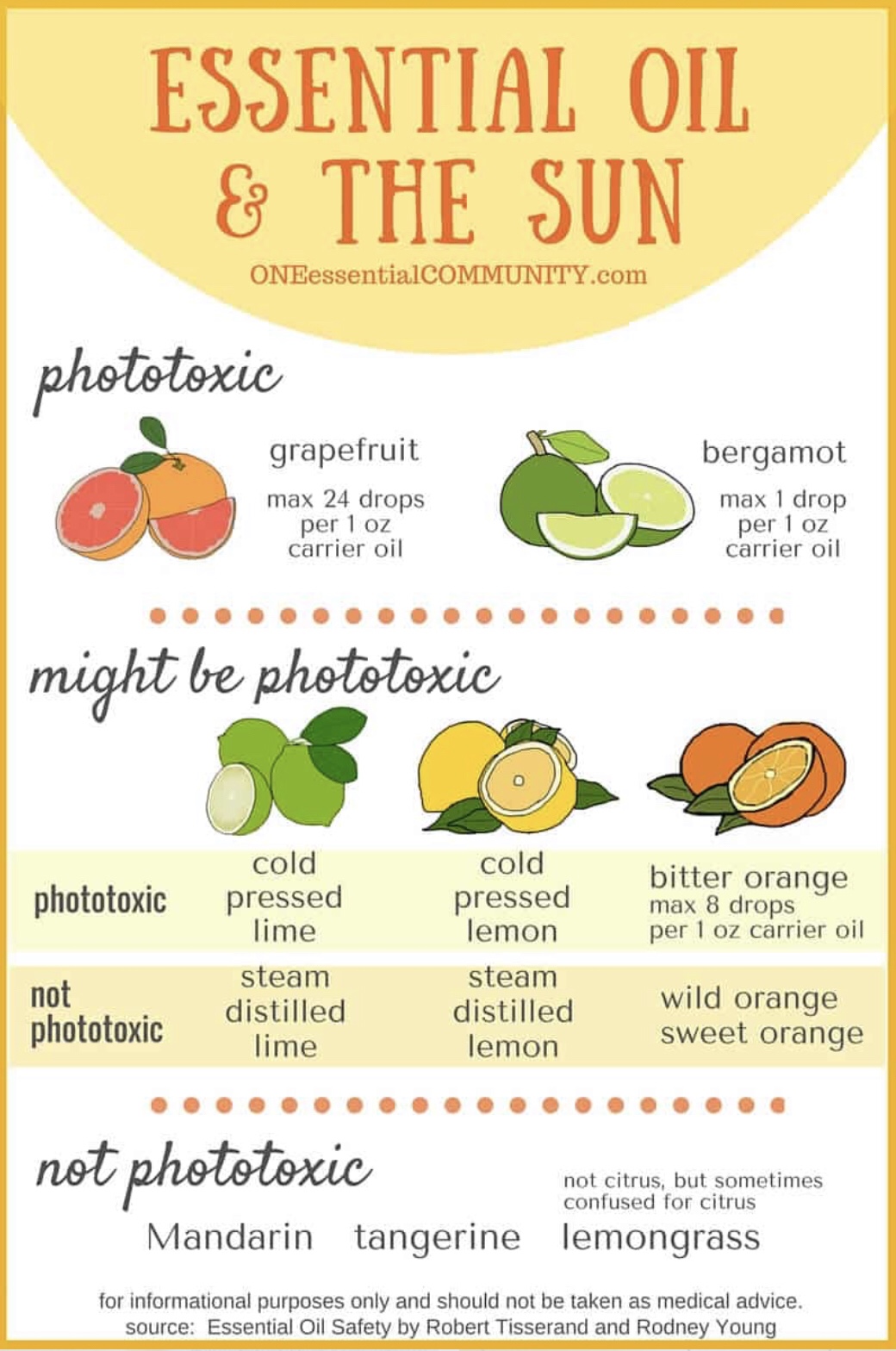
    Check out this handy chart:

    Non-Phototoxic Oils

    According to the acclaimed Essential Oil Safety book, the following oils are considered non-phototoxic:

    • Mandarin essential oil
    • Wild orange/Sweet orange essential oil
    • Tangerine essential oil
    • Steam-distilled lemon essential oil
    • Steam-distilled lime essential oil
    • (Please note that lemongrass is also not phototoxic and is in fact, not even a citrus oil!)

    Phototoxic Oils

    That being said, these oils are considered phototoxic:

    • Bergamot essential oil
    • Grapefruit essential oil
    • Bitter orange essential oil
    • Cold-pressed lemon essential oil
    • Cold-pressed lime essential oil


    BE EXTRA CAUTIOUS WITH BERGAMOT AND COLD-PRESSED LIME 

    Not all of the oils listed above are equally phototoxic. For example, one drop of bergamot is 24 times more phototoxic than grapefruit oil.

    According to the information gathered from the knowledgeable and amazing One Essential Community, this list details the maximum number of drops per ounce of carrier oil it takes to create a phototoxic reaction:

    • bergamot 1 drop
    • cold-pressed lime 4 drops
    • bitter orange 8 drops
    • cold-pressed lemon 12 drops
    • grapefruit 24 drops


    Conclusion

    We have to be smart with these oils! They pack a powerful punch and it’s important we are informed and make good choices.

    When it comes to phototoxic oils, One Essential Community recommends the following:

    1. Use less of the phototoxic essential oil than the recommended maximum listed above.  So, for example, the recommended phototoxic-safe maximum number of drops of cold-pressed lemon per ounce of carrier oil is 12.  A 10ml roller bottle is 1/3 of an ounce, so the recommended maximum for a 10ml roller bottle is 4 drops of cold-pressed lemon. Use fewer than 4 drops of grapefruit per 10ml of carrier oil and you can safely use that diluted cold-pressed lemon roller bottle even on skin that might be exposed to the sun.
    2. Wear clothing with SPF and/or long-sleeves over the phototoxic oil
    3. Diffuse your oils instead of applying topically
    4. Use phototoxic oils in a product that will be washed off (soaps and scrubs, etc)

    Resources

    https://theherbalacademy.com/truth-phototoxic-essential-oils-use-safely/

    https://www.aromaweb.com/books/tissera2.asp

    https://oneessentialcommunity.com/phototoxic-citrus-essential-oils-sun/

  • Customizing Shampoo with Essential Oils: A Review of the Argan Oil Blend by Maple Holistics

    Hi guys! Today I want to talk about hair ❤️

    Like most people, I love it when my hair feels healthy and pretty ☺️🌿 But, I find that that isn’t always the easiest balance to strike! In an effort to find that balance though, I’m always experimenting with all kinds of hair remedies: I’ve gone no-poo, done lots of ACV and baking soda, made countless hair masks with all kinds of funky things like avocados and honey and cinnamon…and while those things have oftentimes worked well, sometimes a girl just wants a straight up healthy shampoo. Because for me, it’s all about trying different things, while not breaking the bank or having my methods be too time-consuming.

    Enter @mapleholistics 😍

    I first found this amazing brand when searching for an affordable brand that:

    🔘 is sulfate and paraben free

    🔘 contains natural ingredients I can actually pronounce

    🔘 ACTUALLY WORKS, meaning, makes my hair look, feel, and smell great

    🔘 doesn’t break the bank ($8.95 for 8 oz. bottle with $1 off coupon and free shipping for Amazon Prime members)

    I gotta say, this brand checks all those boxes for me! ✔️✔️✔️✔️

    As far as customizing my shampoo, I just love adding a few drops of different oils to the base blend of shampoo I’m using. I usually pour out maybe 2-3 ounces into a separate container (this way, I can customize multiple times per bottle!) and add whichever drops of oil my hair is craving. I choose the oils according to the needs of my hair, which depend so much on the time of year and whatever I currently have going on. Check out this chart I made that helps me decide which oils to add to my shampoo:

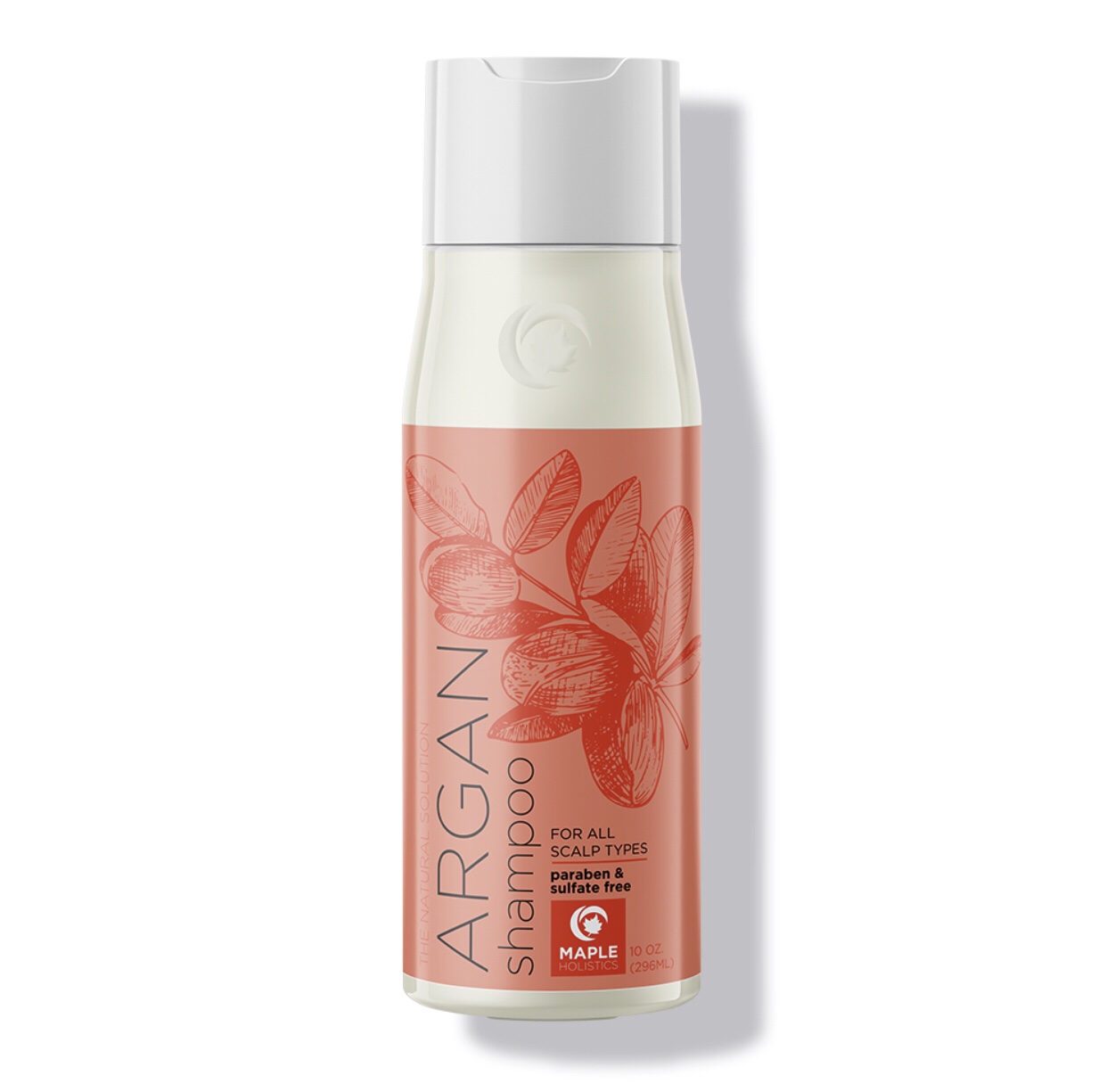
    As far as the Argan Oil Blend from @mapleholistics that I’m currently using as my base, here’s what it claims:

    “Get glowing and flowing locks with our argan oil shampoo. Native to Morocco, argan oil, also known as “liquid gold” locks in moisture and deeply nourishes dry and damaged hair. Our shampoo gently cleans without stripping hair of its natural oils to leave your hair silky smooth, instead of dry and frizzy. It helps strengthen and protect hair follicles and strands against breakage, split ends, and hair fall. Peach kernel, almond and jojoba oils add softness, volume, and shine. Our shampoo is sulfate and paraben-free making it great for all hair types, color treated hair, and sensitive skin.”

    Considering I just had a baby and am dealing with the literal hormonal fallout associated with that, here’s my thoughts about this Argan Oil Blend:

    ✔️My hair feels fuller

    ✔️My hair feels silky and smooth

    ✔️My hair feels strong and healthy

    ✔️I notice positive benefits immediately after use

    Please note that I’m currently adding the following oils to my Argan Oil Blend base:

    🔘 2-3 drops rosemary

    🔘 2-3 drops lemon

    🔘 1 drop peppermint

    🔘 1 tiny drop of castor oil (locks in moisture)

    As you can probably tell, I’m loving this product! My hair feels great and equally important, I feel great knowing I’m supporting my commitment to a healthy lifestyle.

    Check out this product page and blog post for more information:

    Product Page

    https://www.mapleholistics.com/products/hair-care/shampoo/argan-oil-shampoo/

    Blog

    https://www.mapleholistics.com/blog/damaged-hair-shampoos/

    Love,

    Amanda

  • 6 Tinc Recipes for Detoxifying Your Home

    Hi guys!

    In today’s blog post, I want to share some awesome recipes for detoxifying your home. I’ve found that making my own cleaning products is a really empowering and fun and oftentimes thrifty thing to do. Yay! I love all of those things 🙂

    So, I must say…before I had kids, I thought I cared about leading a healthy lifestyle and doing my part to reduce my carbon footprint. And I did! But becoming a mom has fundamentally shifted my perspective on…well, everything! Now I’m like HYPER-AWARE of things I hadn’t thought to think about before.

    Like cleaning my house, for example.

    It’s no secret that kids are really messy. They put their mouths and sticky little fingers on everything. In the old days (aka before kids), I would just grab whatever random product I had lying around to clean house. But now I carefully read labels. And I’ve become scarily informed about something called endocrine disrupters [1]. These are chemicals that are known to mess with the endocrine system, which is basically responsible for hormonal, reproductive, and other fundamental processes. Let’s just say that we don’t want to be messing around with these glands!

    Soooo, chemicals that can do this are really scary: not just because of the havoc they can wreak on our bodies, but the fact that they are ALL OVER our daily lives 😳 They’re in everything from common plastics and cosmetics to drinking water and receipts…and cleaning supplies.

    In doing my research, I’ve found that the Environmental Working Group (EWG) [2] is a great source of information. You can enter the name of a cleaning supply and see the “environmental grade” it’s been given. This grade will help you to make sense of how toxic your cleaning supplies are — and provide alternatives if your current ones are failing! They’ve also created a really handy “Dirty Dozen” list. These are the 12 worst endocrine disrupters currently known [3]:

    1. BPA
    2. Dioxin
    3. Atrazine
    4. Phthalates*
    5. Perchlorate
    6. Fire Retardants
    7. Lead
    8. Arsenic
    9. Mercury
    10. Perfluorinated Chemicals (PFCs)
    11. Organophosphate Pesticides
    12. Glycol Ethers*

    I highly recommend checking out this article by the EWG to learn more specifically what these nasty chemicals are and what steps can be taken to avoid them.

    In the meantime, being that tinc botanica is all about cultivating a healthier lifestyle through essential oils, let’s talk specifically about #4 Phthalates and #12 Glycol Ethers, from the Dirty Dozen list above. We’re focusing on these two chemicals because of the role essential oils can play in creating safer and healthier alternatives!

    #4 PHTHALATES

    “[S]tudies have linked phthalates to hormone changes, lower sperm count, less mobile sperm, birth defects in the male reproductive system, obesity, diabetes and thyroid irregularities.” [3]

    Found In: Some plastic food containers, children’s toys (some phthalates are banned from kid’s products), plastic wrap made from PVC, PVC products which have the recycling label #3, and personal care products that contain “fragrance.”
    How to Avoid: Use stainless steel or glass food storage containers, avoid plastic kid’s toys or check to see if they contain PVC #3 plastic, avoid PVC products, and avoid personal care products that contain the catch-all ingredient “fragrance.”

    Please be aware and take note: the word “fragrance” on labels can mean a million things (and most of them are not good!). This is generally a shady way for companies to slip in all kinds of nasty stuff, including phthalates. They can legally hide behind the word by saying that whatever they are calling a “fragrance” involves trade secrets. But, according to the EWG, “3,163 ingredients hide behind the word ‘fragrance’.” [5]

    #12 Glycol Ethers

    “The European Union says that some of these chemicals ‘may damage fertility or the unborn child.’ Studies of painters have linked exposure to certain glycol ethers to blood abnormalities and lower sperm counts. And children who were exposed to glycol ethers from paint in their bedrooms had substantially more asthma and allergies.” [3]

    Found in: Paints, cleaning products, brake fluid, and cosmetics.
    How to Avoid: Choose safer cleaners and cosmetics. And choose safer paints and always wear a mask and ventilate the room you are painting.

    I very highly recommend checking out the EWG’s “Skin Deep” site for more information.

    And now…without further ado, I give you 6 tinc recipes for detoxifying your home:

    TINC DIY HOUSECLEANING RECIPES

    #1 All-Purpose Surface Spray 🌿

    • 4 oz. distilled water
    • 4 oz. white vinegar
    • 4 drops lemon essential oil
    • 3 drops clove essential oil
    • 3 drops eucalyptus essential oil
    • 2 drops rosemary essential oil
    • 8 oz glass spray bottle

    Mix ingredients in 8 oz. glass spray bottle (glass is preferred for the safe storage of essential oils, and is also another way to reduce endocrine disrupters in your home!).

    You can use this great-smelling cleaner on many surfaces, such as:

    • Windows
    • Carpet Stains
    • Microwave
    • Mirrors
    • Toilet
    • Sink
    • Shower
    • Floors

    This spray works great! Plus, you get the added peace of mind of knowing you are detoxifying your home every time you use it 💗

    #2 Borax-Free Laundry Soap 🌿

    • 2 cups of hot water
    • 1 cup baking soda
    • 1/3 cup salt (nothing fancy – iodized works great!)
    • 1 cup Castile soap
    • 10 drops lavender essential oil (or any other oil with cleaning powers that you wish!)
    • a jug for storage (an old milk or water jug works great!)

    To Make and Use:

    1. Combine hot water, baking soda, and salt in jug
    2. Make sure lid is secure and shake well
    3. Add 1 cup Castile soap (I use Dr. Bronner’s) and shake again
    4. Add 10 drops of essential oil (again, I use lavender but you can use any other cleaning oil you’d like)

    Your (chemical free!!) laundry soap is ready! Use 1/4 cup per load. It’s suds-free and works fine in HE machines.

    Please note: the ingredients will separate, but because this recipe is chemical-free, there’s no bonding agent and therefore no need for them to dissolve together. Just remember to shake well before using!

    #3 All-Natural Sink Scrub 🌿

    • 2 cups baking soda
    • 10 drops lemon essential oil
    • 10 drops clove essential oil
    • 2-3 Tbsp castile soap
    • Mason jar
    • Scrubber

    To Make and Use:

    1. Put baking soda in jar
    2. Mix in essential oils
    3. Wet sink
    4. Liberally sprinkle your mix on sink
    5. Add a few squirts of castile soap
    6. Scrub and rinse

    Doing this regularly will a) keep your sink spotless, b) be a super cost-effective way to clean, and c) make you feel great to clean without harmful chemicals while also smelling great!

    #4 All-Natural Dusting Spray 🌿

    • 1 cup vinegar
    • 1/2 cup sweet almond oil
    • 30 drops citrus essential oils
    • Filtered Water
    • 16 oz. spray bottle

    How to make and use:

    1. Add one cup filtered water to 16 oz. spray bottle
    2. Add 1/2 cup vinegar (even if you don’t like the smell of vinegar, please don’t skip this step — it’s a fabulous natural cleaner and even helps keep future dust from sticking to the surface, so your house will be dust-free for longer)
    3. Add 1/2 cup of sweet almond oil
    4. Add 30 drops of essential oils (I love grapefruit, lemon, or sweet orange)
    5. Mix gently before each use
    6. Use on all your wood surfaces

    Note: citrus oils are a wonderful choice for dusting because of their bactericidal, antiseptic, and antimicrobial properties. They also SMELL GREAT and make fabulous mood-lifters!

    #5 All-Natural Dish Soap 🌿

    • 1 cup castile soap
    • 1 tsp baking soda
    • 1 tsp carrier oil of your choice (I like grapeseed or olive)
    • 1 1/2 cups filtered water
    • 12-15 drops citrus essential oil (I like orange or grapefruit)
    • 5-7 drops peppermint essential oil
    • medium bowl
    • whisk
    • glass jar with pump

    How to make and use:

    1. Combine water and castile soap in medium bowl
    2. Add baking soda, carrier oil, and essential oils
    3. Using a whisk, VERY GENTLY add baking soda until combined well
    4. Pour into glass jar and add pump lid
    5. Use like you would any other dish soap! Except minus all the unnecessary and gross toxic chemicals. Plus they smell great and provide therapeutic benefits

    #6 All-Natural Liquid Hand Soap 🌿

    • 1 cup Castile soap
    • 8-10 drops geranium essential oil
    • 8-10 drops tea tree (melaleuca) oil
    • filtered water
    • 10 oz. pump bottle (I reuse an old hand soap bottle)

    Mix all ingredients in your pump bottle and top off with filtered water.

    Note: I use geranium oil because it nourishes skin (and smells gorgeous!) I use tea tree oil because of its antiviral and antibacterial properties.

    YOU GUYS. There are so many ways to reduce chemicals in your homes. I know the task of detoxing can seem super daunting, but you can do it! Just choose your battles, and focus on one thing at a time. I hope you enjoy these recipes! I’ll be adding more soon enough…I’m always brainstorming and experimenting over here 🤔 In the meantime, happy detoxifying!

    Much Love,

    Amanda

    Resources

    1. https://www.niehs.nih.gov/health/topics/agents/endocrine/index.cfm
    2. https://www.ewg.org/guides/cleaners
    3. https://www.ewg.org/research/dirty-dozen-list-endocrine-disruptors
    4. https://www.ewg.org/skindeep/
    5. https://www.ewg.org/enviroblog/2010/02/3163-ingredients-hide-behind-word-fragrance
  • Oils-Based Postpartum Recovery

    Hi Friends!

    I’m thrilled to share that our sweet little babe has just arrived 💗 And while I’m of course overflowing with love and joy for the new addition to our family, having already done this before, I’m keenly aware of the supports that I need in order to a) physically heal, b) manage the hormones, c) manage the stress, d) get enough sleep, and e) get the breastfeeding support I deserve and need. (And I’m only highlighting some of the challenges we mamas face in the weeks and months (and years 😉) following the birth of our little ones!!)

    During the recovery time, self-care is more important than ever. Connecting with loved ones, drinking tons of water, eating clean foods…these are all important and valuable postpartum recovery tips. But today I want to focus on the role essential oils can play in the healing process. Listed below are some of the essential oil tips and recipes I’m currently using to help ease my way through the beautiful and complicated process of birthing a babe into this world.

    1. Perineal Spray

    The physical portion of recovery can be quite intense! And if you think about it, it makes sense…it took about 40 weeks for the baby to grow to the point of being ready for the outside world, and it’s going to take time for your body to heal from the experience of pregnancy and the birthing process itself. One of the many tricks I use for this process is my homemade perineal spray. I keep mine in the fridge and spray it on my perineum every time I use the restroom. Not only does it feel amazing and refreshing, but the healing properties of the spray help to expedite my recovery!

    Ingredients:

    *2 Tbsp. aloe vera gel

    *3 Tbsp. witch hazel

    *4-6 drops frankincense

    *4-6 drops clary sage

    *distilled water

    *2 oz. spray bottle

    Mix everything together in the bottle and keep in the refrigerator. Shake before use.

    1. Oils for Hormonal Support

    This is a list of 10 oils known for their hormonally supportive properties (read full article here):

    • Vetiver – alleviates emotional stress, anxiety, and feelings of sadness
    • Lemongrass – mood-booster, stress-reliever, anti-nausea
    • Lavender – known for its powers to improve postpartum depression
    • Bergamot – hormonally balancing and lifts mood
    • Jasmine – anti-anxiety with mild sedative properties
    • Rose – known to treat anxiety disorders
    • Ylang Ylang – properties similar to Rose
    • Clary Sage – promotes hopeful feelings and a proven anti-depressant
    • Geranium – improves mental functioning
    • Neroli – encourages happiness and used to treat depression

    There are MANY ways to use these oils for hormonal support. Here are just a few of the ways I use them:

    • Put a few drops in epsom salt and enjoy with my bath (regular baths are definitely a must during the recovery period!). Please note: oils are safer and more effective when first soaked in salt, as opposed to dropping directly into the water.
    • Make a diffuser blend with 1-3 of the oils listed above. Experimenting is my favorite part!
    • Make a roller blend.
    • Sometimes I take a big whiff of one of these oils directly from the bottle! This too can provide a quick boost of goodness 🦋
    1. Anti-Anxiety Blend

    Besides using the list above for hormonal support, sometimes an anti-stress blend is just what the postpartum recovery doctor ordered. There are a ton of different oil blends that can be relaxing, but I specifically like geranium and tangerine for my postpartum recovery. Here’s why:

    Geranium has over 65 phytochemicals and is loaded with antioxidants. For these reasons and more, studies have shown that geranium can “help relieve anxiety, and bring higher levels of wellbeing.” [2]

    Tangerine, like other citrus oils, can create an instant mood boost. It has a calming effect and can therefore be a wonderful oil for anxiety. [3]

    I like to put a couple drops of each oil in my diffuser when I’m feeling stressed or just need a quick mood boost. I also like to keep an anti-anxiety roller around for the same reasons. I generally roll a little bit on each of my pulse points (ie – wrists, behind ears, bottoms of feet, etc) to ensure I’m getting all the benefits.

    1. Sleep Support

    It seems that whether or not we have kids, everyone these days could do with some improvements to their sleep situation. And if you do have children, then you especially know about the importance of sleeping when the baby sleeps in order to stay ahead of becoming seriously sleep deprived.

    But never fear! I have a few oils-related sleep tricks for that 😉

    • First, I use my Sleepy Time blend. This blend is made of lavender and cedarwood (though I sometimes add a few drops of vetiver if I think I need a little extra support) and I usually either diffuse it in my bedroom, or use my Sleepy Time spray on my pillows and sheets. Both make a remarkable difference and I swear by the relaxing effects of this blend 💗
    • Next, I use my Magnificent Magnesium Butter. This butter is seriously amazing. If you have not heard about this stuff, please do read my article about it here. In a nutshell, magnesium is a mineral that many of us could use a lot more of! While eating more magnesium-rich foods and/or taking a quality supplement can help, oftentimes the topical application can be especially effective. For sleep specifically, I rub a tiny bit on the back of my neck and the bottoms of my feet.
    1. Breastfeeding Support

    Last but certainly not least, I want to address some of the supports oils can provide while breastfeeding. If you are choosing to breastfeed your babe, it’s likely you are no stranger to sore nipples and/or painfully engorged breasts (especially when the milk is coming in, but also later if you’ve missed a feeding or gone too long in between!).

    By no means am I medical doctor or expert, but I can absolutely share the things I’m doing that have given me relief:

    • Food-grade coconut oil – I make a point of rubbing food-grade coconut oil on my nipples after most feedings. This helps to prevent sore and cracked nipples going forward, and since it’s food grade, I don’t worry about my baby ingesting any residual oil on her next feeding.
    • Geranium and Clary Sage – there are several oils that can help with different aspects of breastfeeding, but a combination of these two have been shown to help increase your supply [4]. I recommend making a roller using a few drops of each oil and a liquid coconut oil or olive oil as my carrier. If using liquid coconut oil, be sure it is food grade [5]. Apply blend to breast and lymph area. I’ve also read that applying to the spine near the breast area can provide support as well.
    • A note on Peppermint oil – this oil has gained a reputation for its ability to decrease milk supply and therefore, it’s recommended to avoid use until ready to wean. [6]

    In today’s “go go go” society, it can be challenging to slow down and be present. But honoring our bodies during the sacred time that is postpartum recovery is one of the biggest gifts we can give not only our babies, but ourselves.

    I owe it to to both my baby and myself to take this time to heal 💗

    Resources:

    [1] https://kaboutjie.com/health-safety/10-essential-oils-as-natural-remedy-for-postpartum-depression/

    [2] https://organixx.com/best-essential-oils-anxiety/

    [3] https://www.aromafoundry.com/blogs/aroma-foundry/tangerine-essential-oil-uses-description-recipes-precautions

    [4] https://kidsactivitiesblog.com/110391/essential-oils-boost-milk-supply-breastfeeding

    [5] https://livelovefruit.com/can-you-cook-with-fractionated-coconut-oil/

    [6] https://kellymom.com/bf/can-i-breastfeed/herbs/herbs-oversupply/

1 2
Next Page

Proudly Powered by WordPress.com


Loading Comments...
 

    • Subscribe Subscribed
      • tinc botanica
      • Already have a WordPress.com account? Log in now.
      • tinc botanica
      • Subscribe Subscribed
      • Sign up
      • Log in
      • Report this content
      • View site in Reader
      • Manage subscriptions
      • Collapse this bar